

From India to Thailand: Why Global F&B Internships Are Shaping Hospitality Careers
Not Everyone Is Meant to Sit in a Classroom Forever… Some Are Meant to Step Into the World
It all begins with a question that refuses to leave:
“Is this really the path I’m meant to follow?”
For many students, especially those drawn to hospitality, culinary arts, and service, the answer doesn’t lie in long lectures or theoretical degrees.
It lies somewhere else.
In kitchens. In hotel lobbies. In real conversations. In real work.
And sometimes… it lies in a country thousands of miles away.
Japan.
Why Japan Feels Different
Japan doesn’t just teach hospitality. It lives it.
There’s a word in Japan, Omotenashi.
A philosophy that goes beyond service. It means anticipating a guest’s needs before they even speak.
It is quiet. It is precise. It is deeply human.
And this philosophy has made Japan one of the most respected hospitality cultures in the world.
For a student, learning in such an environment is not just education. It is transformative.
The Hidden Path, most students aren’t aware about:
When people think of studying abroad, they imagine universities.
But Japan offers something far more practical and often more powerful.
Vocational education.
In Japan, these are called Specialized Training Colleges (Senmon Gakko). officially recognized as part of the higher education system.
These institutions are built for one purpose: To prepare you for real work.
Not someday. But immediately.
Students don’t just study theory. They train in real-world environments: hotels, restaurants, service spaces.
And within 2 years, many graduate with industry-ready skills that directly lead to employment.
What you actually learn (and why it changes everything)
A vocational course in Japan is not a passive experience. It is immersive.
You learn:
- Japanese language and communication
- Professional etiquette and cultural behaviour
- Real-time hospitality operations
- Customer interaction and service excellence
- Technical skills in kitchens, hotels, and tourism
In many programs, students even follow a “learn and earn” model, gaining practical experience while studying. This is where the shift happens.
You stop being a student preparing for the future. You become a professional living it.
The Discipline that shapes you before the world does
Japan doesn’t just train your skills. It trains your mindset.
Punctuality is not a suggestion. Precision is not optional.
Respect is not taught; it is expected.
And slowly, without you realising it, you begin to change.
You think differently.
You work differently.
You carry yourself differently.
This is why graduates of Japanese vocational programs are valued globally.
Because they don’t just know the job. They understand the standard too.
But here’s the reality
This path is not easy. You will need:
- Basic Japanese proficiency (often JLPT N5–N3 level)
- Cultural adaptability
- Discipline and consistency
- The ability to step out of comfort zones
In fact, many vocational schools require students to study Japanese for at least 6 months before admission.
Further, for an Indian student, this journey is more than academic.
It is personal.
You leave behind familiarity.
You step into a culture that values silence as much as speech.
You learn to live independently.
And somewhere along the way, you discover yourself, too
Not the version shaped by comfort. But the version is shaped by challenge.
Why This Investment Is Different
Many students ask: “Is it worth it?”
But the real question is: What are you investing in?
If it’s just a degree, maybe not.
But if it’s:
- Global exposure
- Real-world experience
- Cultural intelligence
- Professional discipline
Then the answer changes.
Because a vocational course in Japan doesn’t just give you education.
It gives you direction.
The Careers that follow
Graduates from hospitality vocational programs in Japan often move into:
- Hotels and resorts
- Luxury hospitality chains
- Tourism and travel management
- International service industries
And because Japan’s training is globally respected, these opportunities extend far beyond the country itself.
So, Should You Answer the Call?
Not everyone will.
Because this path asks for more.
More courage. More discipline. More belief.
But for those who do…
It doesn’t just change where you work.
It changes who you are.
The Final Thought
Some journeys begin with a decision. Others begin with a feeling.
That quiet voice that says: “There’s more out there for you.”
If you’re hearing that voice… Maybe it’s time to listen. Because sometimes, the right path isn’t the most obvious one. It’s the one that challenges you to become more than you are today.
Answer the Call And step into a future that is earned by YOU for yourself.
---------------------------------------- Ye mera purana post hai same isi tarah html set kro mere new post ke liye kuch bhi extra content mat add kra --- A hospitality degree can teach you the fundamentals. You learn how a restaurant operates, how a kitchen functions, how to serve a guest, and how different departments come together to create an experience. But there is one thing a classroom can never completely replicate: the feeling of working in a real, international hospitality environment. That is where an international F&B internship can change the way a student sees their career. For Indian hospitality and culinary students, destinations like Thailand offer an opportunity to step beyond textbooks and experience hospitality in a completely different cultural and professional setting. You don't just learn about the industry. You become part of it. Why Thailand? Thailand has built a strong identity around hospitality and tourism. From luxury resorts and international hotels to restaurants, cafés, and large-scale food and beverage operations, the country offers a dynamic environment for students who want to understand how global hospitality works. For an aspiring F&B professional, this means learning through real experiences. You work alongside people from different backgrounds, interact with international guests, understand different service expectations, and experience the pace of a professional hospitality operation. And sometimes, the most valuable lessons happen when things don't go according to plan. F&B Is About More Than Food When students hear "F&B," they often think about food preparation, restaurant service, or kitchen operations. But food and beverage is much bigger than that. It is about understanding people. It is about communication, teamwork, timing, presentation, consistency, and the ability to make a guest feel welcome. A guest may forget exactly what they ordered. But they are unlikely to forget how they were treated. An international F&B internship gives students the opportunity to experience this human side of hospitality. It teaches them that great service isn't simply about following a checklist. It is about observing, adapting, anticipating needs, and creating experiences people remember. The Real Classroom Is a Busy Workplace Imagine starting your day in an international hotel where guests arrive from different parts of the world. Your colleagues may have completely different cultural backgrounds and ways of working. One moment, the restaurant is quiet. The next, every table is occupied, orders are coming in, guests need assistance, and the entire team has to move together. This is where a student begins developing something that cannot be taught entirely through a textbook: professional composure. You learn to communicate under pressure. You learn to prioritise tasks. You learn to ask for help when you need it and step up when someone else needs yours. Most importantly, you learn that hospitality isn't about ensuring that nothing ever goes wrong. It is about knowing how to respond when it does. Adaptability: The Skill That Travels With You Hospitality is an industry built around people, and people are different everywhere. Working in another country introduces students to different service cultures, communication styles, workplace expectations, food habits, and guest behaviours. At first, these differences may feel unfamiliar. Then they become lessons. You start observing more closely. You listen more carefully. You become more comfortable adjusting your approach. That is adaptability. And it is one of the most valuable qualities a hospitality professional can develop because your career may take you to hotels, restaurants, resorts, cruise lines, or hospitality brands across different parts of the world. You may not always know what your next workplace will look like, but you can learn how to navigate it. From Technical Skills to Global Skills An international F&B internship doesn't replace hospitality education. It builds on it. Students can continue developing practical skills while simultaneously strengthening communication, teamwork, time management, problem-solving, cultural intelligence, and professional confidence. Working with international colleagues can make communication more intentional. Working in a busy F&B environment teaches you how to manage time without compromising attention to detail. Facing an unexpected guest request teaches you how to think on your feet. And there is a particular kind of confidence that comes from successfully handling your first challenging shift in another country. You return knowing, **"I can do this."** Why International Experience Matters on a Hospitality CV Hospitality is one of the world's most internationally connected industries. Hotels welcome guests from around the world. Restaurants serve international travellers. Luxury hospitality brands operate across borders. Hospitality professionals themselves often build careers across multiple countries. An international F&B internship can therefore tell a potential employer more than where you worked. It can show that you have stepped outside your comfort zone, adapted to a new environment, worked with people from different cultures, and taken responsibility in an unfamiliar setting. Your internship becomes more than a line on your CV. It becomes a story about how you learned to work in the world. Thailand Can Teach You a Different Kind of Hospitality One of the most rewarding parts of working abroad is discovering that hospitality doesn't look exactly the same everywhere. Every country has its own relationship with food, service, guests, and community. Every culture has its own way of welcoming people. Thailand, with its strong connection to tourism and hospitality, offers students an opportunity to experience these differences first-hand. You don't simply study another country's approach to hospitality. **You experience it.** And that experience can change how you think about your own profession. What Students Bring Home Isn't Just Experience Ask a student what they gained from an international internship, and they may initially talk about technical skills, hotel operations, or the work experience they added to their CV. But ask them a little later, and the answer often becomes more personal. They became more independent. They learned to manage their own time. They made friends from different countries. They learned to navigate unfamiliar places. They became more confident speaking to people they had never met. They learned how to handle homesickness and moments of uncertainty. Most importantly, they discovered that they were capable of much more than they had imagined. That is the hidden education of an international internship. And sometimes, it is the most valuable education of all. From India to Thailand: A Journey Beyond Borders For an Indian hospitality student, an F&B internship in Thailand can be much more than a professional opportunity. It can be the first real glimpse into what a global hospitality career looks like. You leave India with knowledge. You arrive in Thailand with questions. You spend your internship learning, adapting, contributing, and discovering. And you return with something that cannot be measured only through a certificate. **Perspective.** Your idea of hospitality becomes broader. Your understanding of people becomes deeper. And your idea of what your career could look like becomes much bigger. Is an International F&B Internship Right for You? An international internship can be particularly valuable for students who want practical exposure beyond their hospitality curriculum, are interested in international hotel and F&B operations, enjoy working with multicultural teams, and see an internship as more than a mandatory college requirement. But more than anything, you need curiosity. Going abroad doesn't automatically make someone a better hospitality professional. **Being willing to learn does.** The Future of Hospitality Is Global Hospitality has never really belonged to one country. It belongs to people who travel, people who welcome, people who cook, people who serve, and people who create experiences. As the industry becomes increasingly global, professionals who understand different cultures and can work comfortably across borders will be better prepared for the opportunities ahead. That is why international F&B internships are becoming more than an attractive addition to a student's CV. They are becoming a training ground for global hospitality careers. From India to Thailand, the journey may cross borders. But the lessons stay with you long after you come home.

What Is Omotenashi And Why Is the World Obsessed With It?

Why French Kitchens are considered the toughest training ground in the world And why that pressure quietly creates the best chefs

What Are Recruiters Abroad Really Looking for in Hospitality Students?
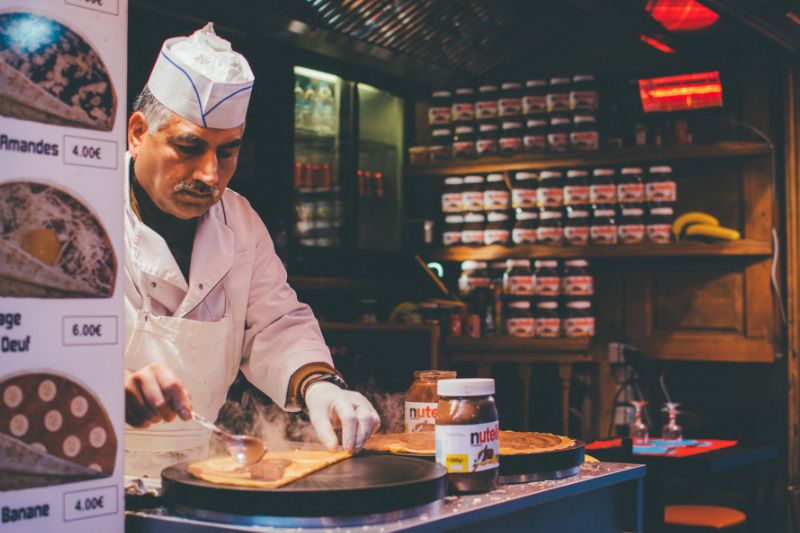
Imagine a day in France as a chef, this is what it looks like

The Courage Tax: Why Every Student Must Step Outside Their Comfort Zone to Grow